Ground notes
How an airplane actually moves
25 Aug 2026
If you are looking at a Private certificate, this is one of the first things that makes the airplane make sense.
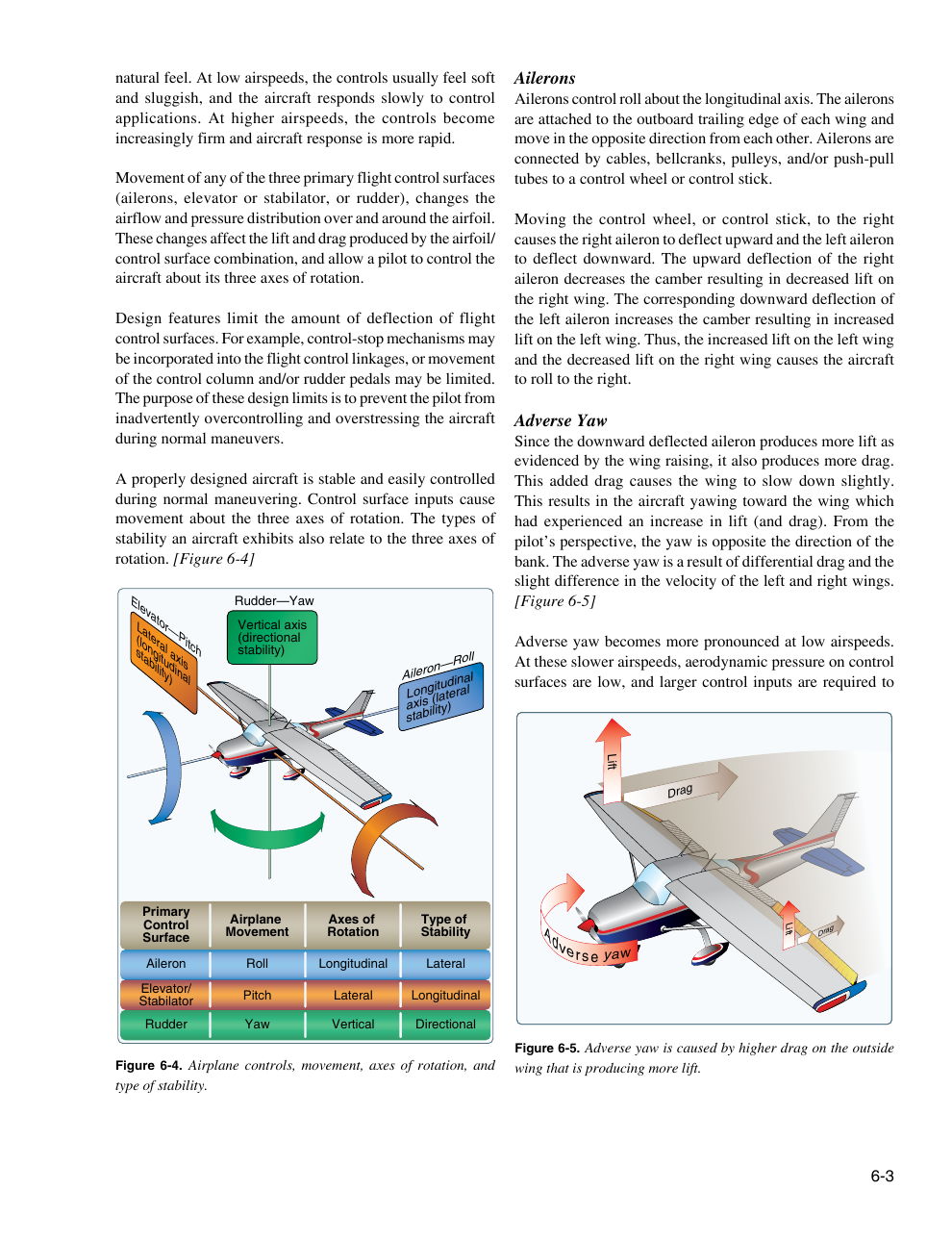
A car turns with the wheels. An airplane rotates. It can roll (one wing up, one down), pitch (nose up or down), and yaw (nose left or right). Those three motions meet at a point in the middle of the airplane, the center of gravity.
You control them with three surfaces.
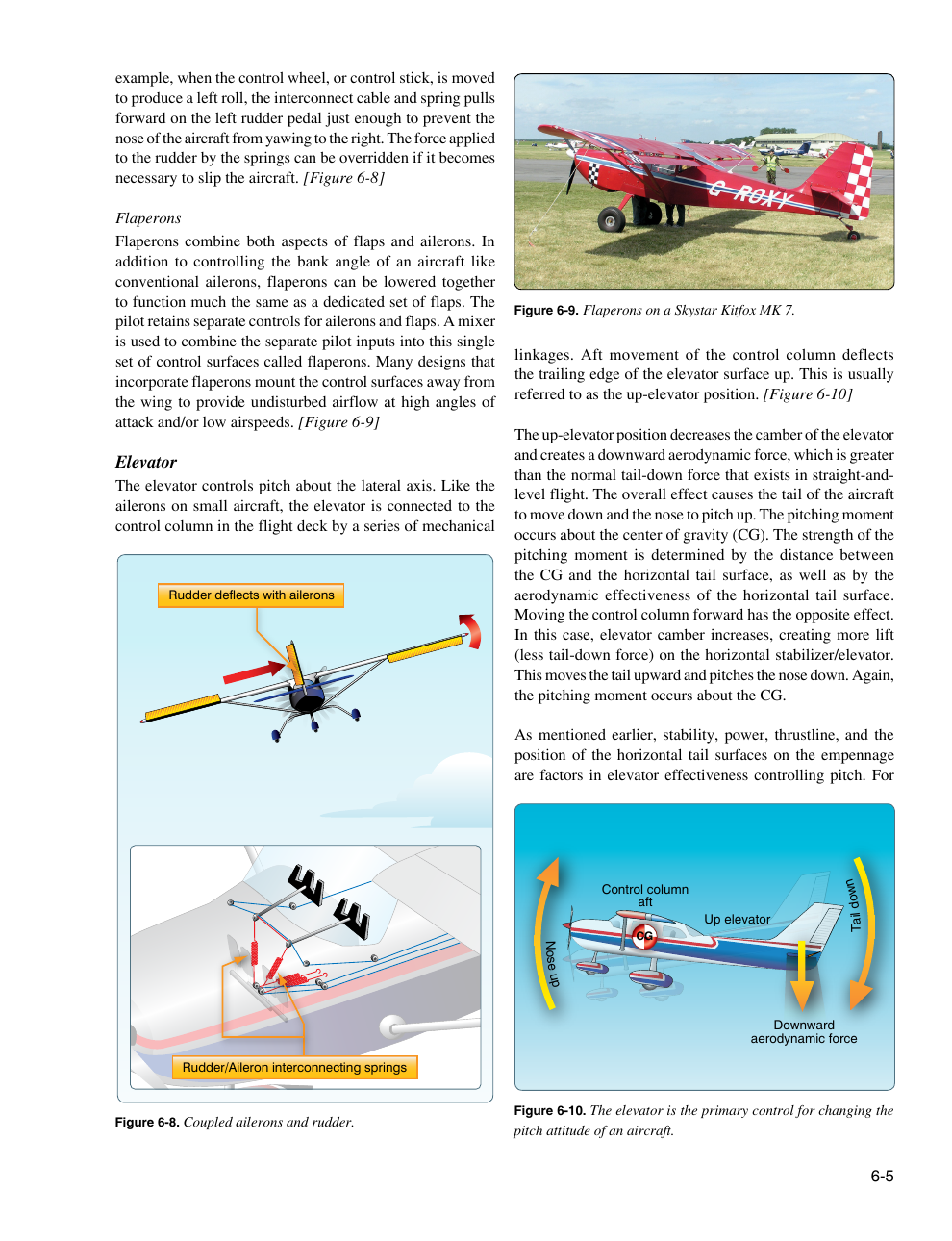
Ailerons sit on the outer back edge of each wing. Move the yoke left or right and the airplane rolls. That is how you bank.
The elevator is on the tail. Pull the yoke back, the nose comes up. Push forward, the nose goes down. That is pitch.
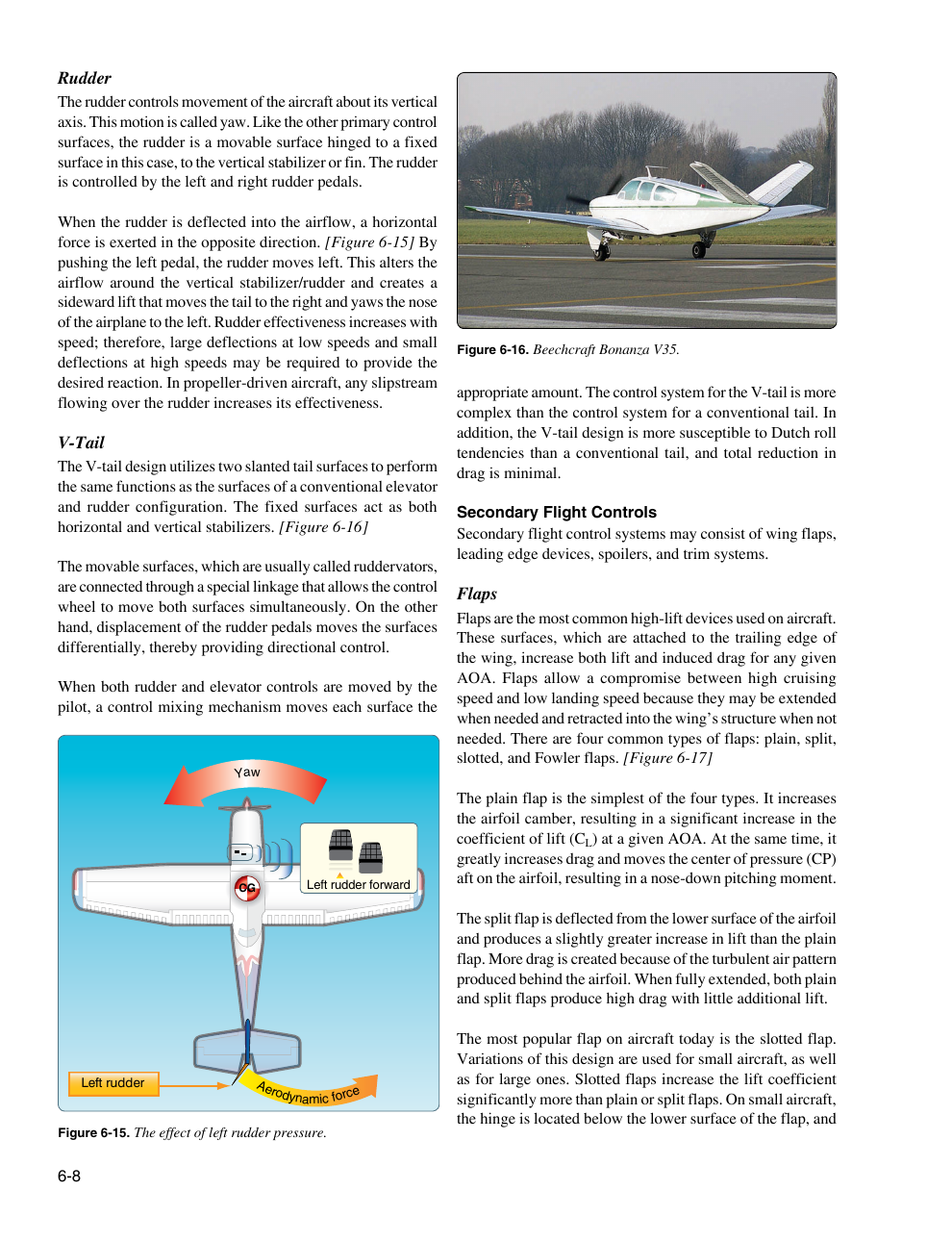
The rudder is the hinged part of the vertical fin, moved with your feet. Left pedal, nose yaws left. Right pedal, nose yaws right.
The part that surprises people: the rudder does not turn the airplane. Banking the wings does. When the wings tilt, lift tilts with them, and that is what starts the turn. The rudder keeps the nose with the turn so you are not sliding or skidding.
Yoke for roll and pitch. Pedals for yaw. Bank to turn.
That is the map we start with at KFMN.
 Enlarge
 Enlarge
 Enlarge
Figures from the FAA Pilot’s Handbook of Aeronautical Knowledge, FAA-H-8083-25C, Chapter 6 (public domain). Companion reading: Airplane Flying Handbook, FAA-H-8083-3C, Chapter 3. PHAK Chapter 6 (PDF) · AFH Chapter 3 (PDF)
Start the conversation
Book a first lesson.
Cessna 172 based at KFMN. Instructor and aircraft $250/hr. Ground instruction or instruction in your own airplane $100/hr.