
Private Pilot
Learn to fly, or finish a certificate you already started. Pattern, cross-country, and the oral, taught for density altitude.
Flight training
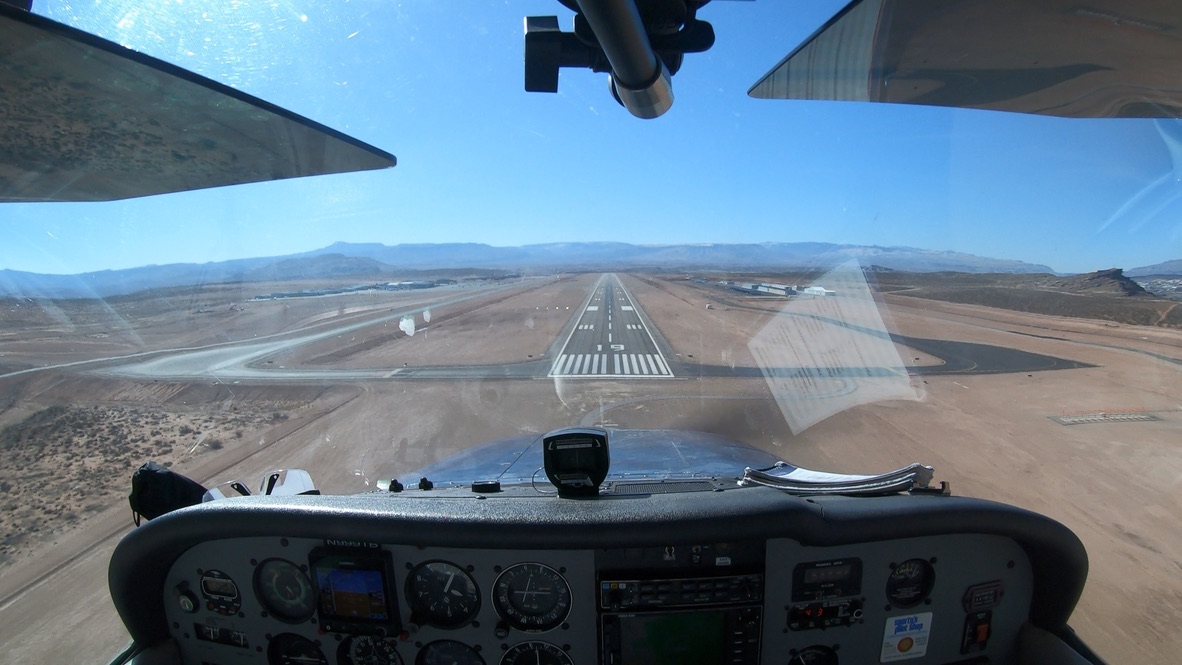
Short final to runway 19, Saint George, Utah.
Certificates and reviews
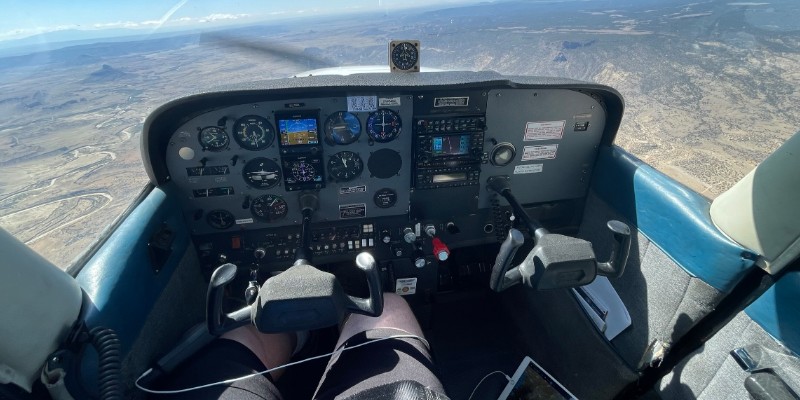
Flight training with Matthew Cox at Four Corners Regional Airport (KFMN) in Farmington.
Learn to fly, or finish a certificate you already started. Pattern, cross-country, and the oral, taught for density altitude.
Develop precision in how you operate and control the airplane. Improve aeronautical decision making and risk management while you prepare for a career in aviation.
Tie your training and experience together. Learn the steps and process it takes to teach other aviators safely.
A real review, not a rubber stamp. Currency, risk, and how the airplane performs at KFMN.
Cessna 172 based at KFMN. Instructor and aircraft $250/hr. Ground instruction or instruction in your own airplane $100/hr.
Ground notes
31 Aug 2026
If you are looking at a Private certificate, late August at Four Corners is when this one shows up on the ramp.
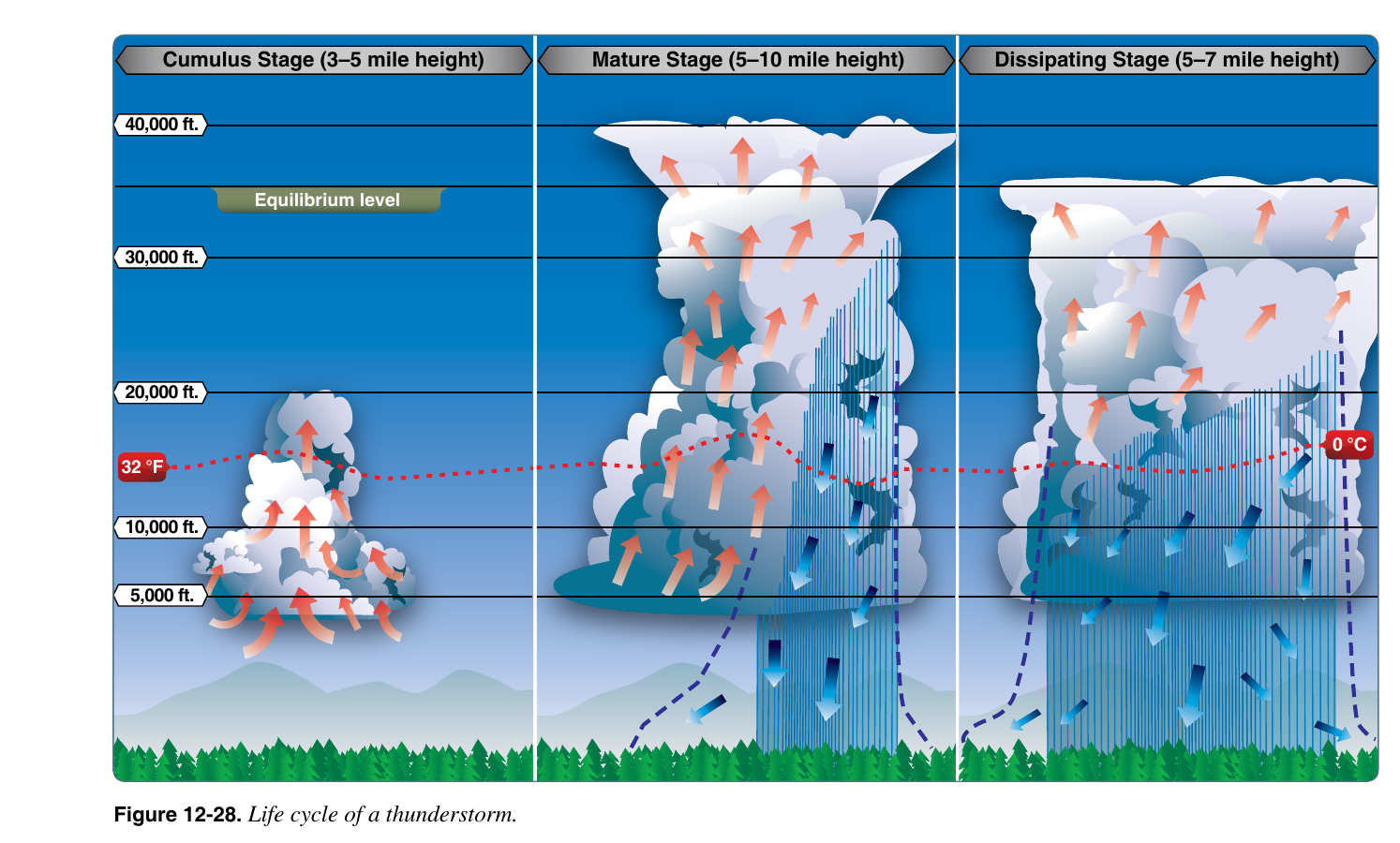
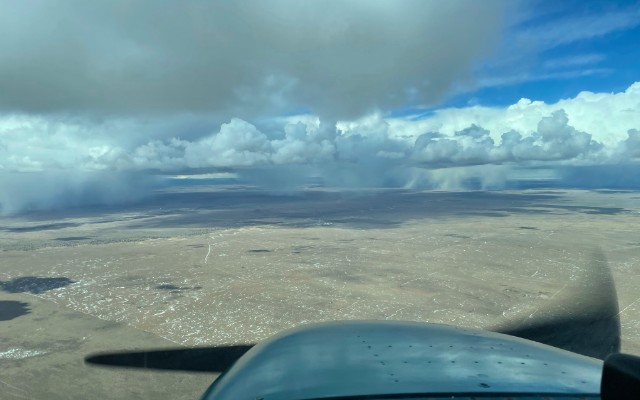
The mesas heat. The air gets unstable. Towers build over the high country around Farmington. That is a thunderstorm getting organized, not a reason to hurry the takeoff.
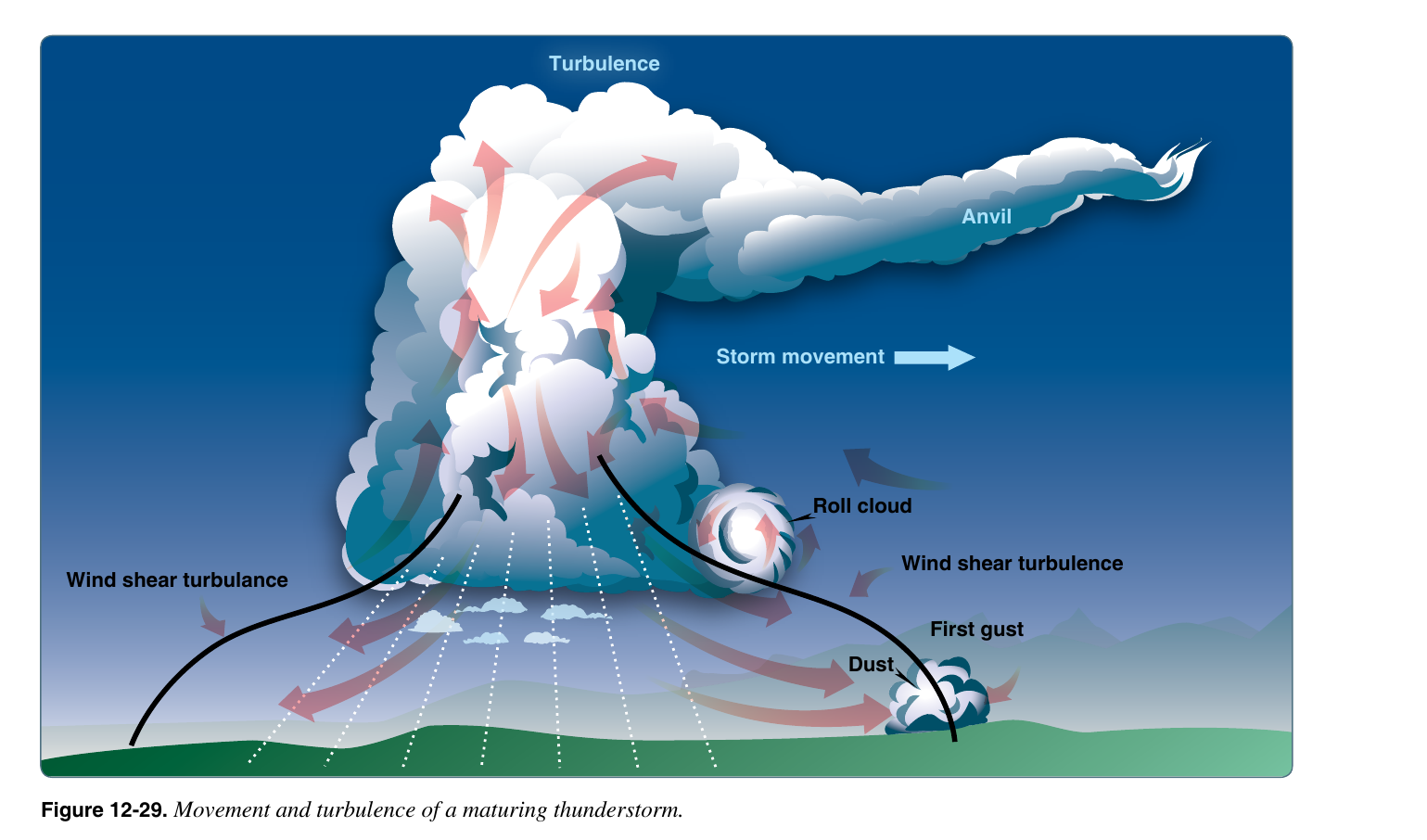
It needs three things: enough moisture, unstable air, and a lift to start it. Around KFMN that lift is often afternoon heat, or air being shoved upslope along the mountains. Then the storm has a life: cumulus, mature, dissipating. The mature stage is the violent one. Rain or hail gets too heavy for the cloud to hold. A downdraft hits the ground. Surface wind changes fast.
You cannot out-climb one in a light airplane. Tops can run 50,000 to 60,000 feet. You also do not duck under it, even if you can see through to the other side. Turbulence and wind shear live under that cloud. Hail can fall miles outside it. Outflow can be well ahead of the rain.
On the high desert the rain sometimes never reaches the ground. Virga, or a ring of blowing dust, may be the only clue of a microburst. The FAA describes a typical one as a mile or two across, lasting minutes, with a downdraft strong enough to take performance away on takeoff or on final.
Do not take off or land into an approaching thunderstorm. Stay at least 20 miles from one that is severe or painting an intense radar echo. If you cannot go around the whole area, wait it out on the ground.
That is how we treat August weather at KFMN.
 Enlarge
 Enlarge
 Enlarge
Figures from the FAA Pilot’s Handbook of Aeronautical Knowledge, FAA-H-8083-25C, Chapter 12 (public domain). Companion reading: Aeronautical Information Manual 7-1-26 and 7-1-27. PHAK Chapter 12 (PDF)
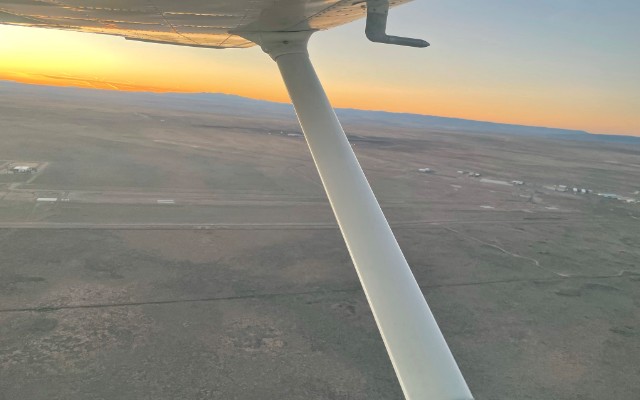
Training country
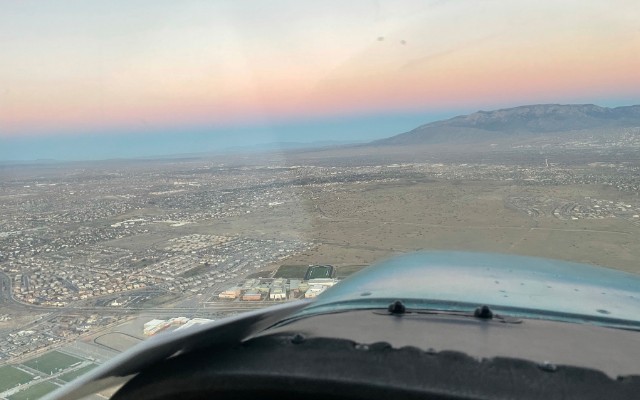
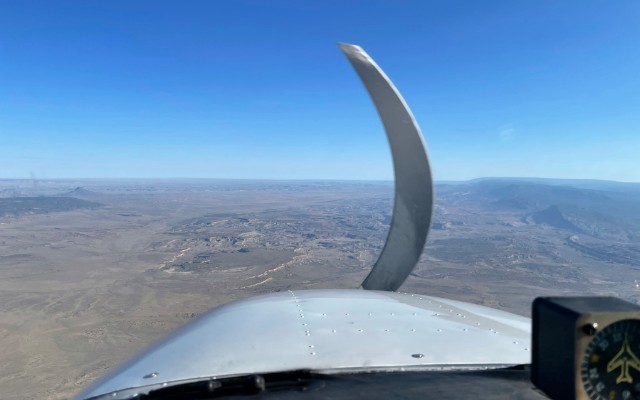
Based at KFMN in Farmington. Cross-country and mountain work includes Albuquerque, Double Eagle, and the high desert plateaus, canyons, and mountain terrain of the desert Southwest.
Start the conversation
Cessna 172 based at KFMN. Instructor and aircraft $250/hr. Ground instruction or instruction in your own airplane $100/hr.